Contact our team for professional guidance and solutions.
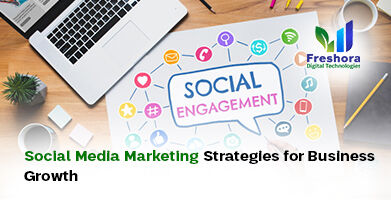
Social media can contribute to business growth, but growth rarely comes from simply posting more frequently or collecting followers. A successful approach connects audience understanding, positioning, content, platform selection, lead generation, conversion and measurement into one coordinated system. Social Media Marketing Strategies for Business Growth should help a business move from being noticed to being considered, trusted and ultimately chosen. That requires content that addresses real customer problems, platform-specific communication, meaningful interactions, strong calls to action and a clear process for handling enquiries. It also requires businesses to distinguish between attention metrics and commercial outcomes. For companies in Trichy, an effective strategy should combine local relevance with broader digital opportunities, allowing the business to compete for nearby customers while building a recognisable online presence. The strongest social media strategy is therefore not the one that produces the most posts; it is the one that creates a repeatable path from audience attention to qualified opportunities and measurable business results.
Social media growth and business growth are not the same thing.
A page can gain:
Thousands of followers
High video views
Strong impressions
Hundreds of likes
and still generate very few customers.
Business growth requires a deeper connection between social activity and commercial outcomes.
A practical growth model is:
Reach → Attention → Interest → Trust → Enquiry → Conversion → Customer
Each stage has a different purpose.
Put the business in front of relevant potential customers.
Give people a reason to stop scrolling.
Provide information that encourages further exploration.
Demonstrate expertise, proof and credibility.
Give interested prospects a convenient way to ask questions.
Make it easy for qualified prospects to purchase or book.
Continue the relationship after the first transaction.
This is the foundation of effective Social Media Marketing for Business Growth.
A common mistake is treating social media as an awareness-only channel.
Awareness matters, but it is only the beginning.
Consider two businesses.
Business A focuses on:
“We need more followers.”
Business B focuses on:
“We need more qualified customers from social media.”
Their strategies will be very different.
Business A may prioritise:
Follower growth
Viral content
High reach
Trending audio
Business B will additionally consider:
Audience quality
Lead intent
Landing pages
Enquiry volume
Lead qualification
Conversion rate
Revenue
This does not mean awareness metrics are useless.
It means they need to be connected to the metrics that matter further down the funnel.
Modern customers rarely move from seeing one post directly to making a purchase.
They may encounter a business several times.
For example:
Instagram Reel
↓
Profile visit
↓
Customer reviews
↓
Educational post
↓
↓
↓
Sales conversation
↓
Purchase
This multi-touch journey makes social media valuable even when the final sale happens somewhere else.
HubSpot's consumer research has found that social media is an important product-discovery channel, particularly among younger consumer groups, while social platforms are increasingly becoming part of the path from discovery to purchase.
Therefore, businesses should not judge every social post solely by whether it generated an immediate sale.
Some content creates awareness.
Some builds consideration.
Some answers objections.
Some creates the final conversion opportunity.
Not every business needs the same social media objective.
The priority may be:
Brand introduction
Audience discovery
Trust building
First enquiries
The focus may shift toward:
Customer acquisition
Retargeting
Content scaling
Conversion improvement
The strategy may emphasise:
Customer retention
Repeat purchases
Community
Brand advocacy
Cross-selling
Market expansion
This prevents businesses from copying competitors without understanding their own growth stage.
What is the biggest commercial bottleneck right now?
If nobody knows the brand, increase qualified awareness.
If people know the brand but do not enquire, improve consideration and conversion.
If leads are coming in but sales are weak, investigate lead quality and follow-up.
The strategy should solve the current bottleneck.
A business-focused social media strategy should create different content for different stages.
|
Funnel Stage |
Customer Question |
Useful Content |
|
Awareness |
“Who are you?” |
Educational videos, brand stories |
|
Interest |
“Can you help me?” |
Service explanations, tips |
|
Consideration |
“Why should I choose you?” |
Reviews, case studies, comparisons |
|
Intent |
“How do I get started?” |
Offers, FAQs, demos |
|
Conversion |
“What should I do now?” |
Clear CTAs, forms, WhatsApp |
|
Retention |
“Why stay with you?” |
Support, community, useful updates |
|
Advocacy |
“Would I recommend you?” |
Reviews, referrals, UGC |
This structure helps prevent every post from having the same purpose.
Businesses do not need to dominate every social platform.
They need to prioritise the platforms that fit their audience and business model.
Useful for:
Visual brands
Reels
Product discovery
Lifestyle content
Local businesses
Creator collaborations
Can be valuable for:
Local communities
Service businesses
Groups
Regional audiences
Offers and events
Particularly relevant for:
B2B companies
Professional services
Recruitment
Technology
Business expertise
Useful for:
Tutorials
Demonstrations
Educational content
Long-form explanations
Search-driven video discovery
The right question is not:
“Which platform is most popular?”
It is:
“Where can our target customers discover, evaluate and interact with us?”
Content should do more than fill a calendar.
A useful content system can contain five core categories.
Address the problems customers are already experiencing.
Demonstrate knowledge without making every post a sales pitch.
Show:
Testimonials
Reviews
Results
Case studies
Projects
Customer experiences
Help potential customers compare options and understand what to look for.
Give interested prospects a clear next step.
This approach creates a more balanced Business Social Media Strategy.
Engagement becomes commercially useful when businesses understand what happens after interaction.
Consider these actions:
Like
May indicate basic interest.
Save
May indicate that the content has future value.
May indicate that the content is useful or relevant enough to pass to someone else.
May reveal a question, opinion or objection.
May indicate increased curiosity.
Can represent stronger intent.
Often creates an opportunity for direct qualification.
Represents a more explicit commercial action.
The objective is not to force every interaction into a sale.
It is to understand which interactions are more likely to contribute to business outcomes.
This is where social media marketing becomes a business discipline rather than a content activity.
Imagine two campaigns:
|
Metric |
Campaign A |
Campaign B |
|
Reach |
100,000 |
45,000 |
|
Enquiries |
80 |
65 |
|
Qualified leads |
15 |
38 |
|
Customers |
4 |
12 |
|
Revenue |
₹40,000 |
₹1,20,000 |
Campaign A generated greater visibility.
Campaign B generated greater commercial value.
Therefore, the business should not automatically increase the budget behind Campaign A.
Cost Per Lead (CPL)
How much is being spent to generate each lead?
Lead-to-Customer Rate
What percentage of leads become customers?
Customer Acquisition Cost (CAC)
How much does it cost to acquire a customer?
Conversion Rate
What percentage of relevant visitors or leads take the desired action?
Revenue per Customer
How much business value does each customer generate?
Return on Ad Spend (ROAS)
How much attributable revenue is generated for advertising spend?
HubSpot also recommends connecting social activity to measurable business impact rather than relying exclusively on channel-specific metrics.
Organic and paid social media serve different purposes.
Useful for:
Expertise
Community
Brand personality
Long-term audience development
Customer education
Social proof
Useful for:
Targeted reach
Lead generation
Offers
Retargeting
Campaign scaling
Audience testing
The two can work together.
For example:
Organic content
A Reel explains a common customer problem.
↓
The business identifies strong interest.
↓
The strongest content or offer is promoted to a defined audience.
↓
People who engaged or visited the website receive a relevant follow-up message.
↓
The prospect submits an enquiry.
This approach can make paid advertising more informed because organic content provides useful audience signals.
For a local business, social media growth should not mean trying to become visible to everyone.
It should mean becoming highly relevant to the right local audience.
A Trichy business can build this relevance through:
Local customer stories
Area-specific content
Regional events
Tamil or bilingual communication where appropriate
For example, instead of:
“How to Choose the Right Digital Marketing Agency”
a more locally focused topic could be:
“What Trichy Businesses Should Check Before Choosing a Digital Marketing Partner”
The second version creates a clearer connection with the intended audience.
A business should identify:
Which locations generate the best customers?
Which services have the highest demand?
Which customer segments are most profitable?
Which campaigns generate qualified local enquiries?
Which areas have growth potential?
That turns local social media from a visibility exercise into a customer-acquisition strategy.
A major weakness in social media reporting is stopping the measurement at the platform.
A business may know:
“This campaign generated 150 leads.”
But that does not answer:
How many leads were qualified?
How many were contacted?
How many became customers?
How much revenue did they generate?
Which campaign produced the best customers?
A CRM can help connect the journey.
Social Campaign
↓
Lead
↓
Qualification
↓
↓
↓
↓
This also helps businesses identify problems.
For example:
High clicks + low enquiries
Possible issue: Landing page or offer.
Possible issue: Audience targeting.
Possible issue: Sales process or follow-up.
Possible issue: Campaign economics.
Without connecting social activity to downstream data, these problems can be difficult to identify.
A viral post may attract thousands of irrelevant viewers.
Better approach: Prioritise relevant attention.
Follower growth does not guarantee revenue.
Better approach: Track qualified audience growth and business outcomes.
Different platforms have different user expectations.
Better approach: Adapt the idea to each platform.
Simply spending money on a popular post does not automatically create customers.
Better approach: Define the campaign objective before investing.
A large number of cheap leads can become expensive if none convert.
Better approach: Measure qualified leads and customer acquisition cost.
Marketing can generate demand that sales fails to capture.
Better approach: Create clear lead-response processes.
A strategy based entirely on assumptions can waste time and budget.
Better approach: Test creative, audiences, offers and landing pages.
Businesses do not control platform algorithms or policy changes.
Better approach: Build owned assets such as websites, email databases and CRM records.
Instead of attempting everything simultaneously, businesses can build the strategy in stages.
Focus on:
Audience research
Competitor analysis
Platform selection
Profile optimisation
Content pillars
Baseline metrics
Lead journey
Conversion tracking
The objective is to understand the current position.
Introduce:
Multiple creative formats
Reels
Educational content
Customer proof
Different CTAs
Lead-generation campaigns
Audience tests
The objective is to identify what creates meaningful response.
Analyse:
Best-performing content
Qualified leads
Conversion rates
Acquisition cost
Audience segments
Platform performance
Sales outcomes
Then:
Scale what works → Improve what is promising → Stop what is inefficient
This creates a repeatable Social Media Growth Strategy rather than a one-time campaign.
|
Statistic |
Latest available data |
|
Global social media user identities, April 2026 |
5.79 billion |
|
Share of global population represented |
69.9% |
|
Annual increase in social media user identities |
294 million |
|
Year-on-year growth |
5.4% |
|
Global internet users, April 2026 |
6.12 billion |
|
Average number of social platforms visited monthly |
6.5 |
DataReportal reports that social media user identities reached 5.79 billion in April 2026, growing by 294 million or 5.4% over the previous 12 months. It also reports that the average active social media user visits 6.5 different platforms each month.
DataReportal notes that “user identities” may not represent unique human individuals, so these figures should be treated as indicators of social-media scale rather than exact counts of unique people.
HubSpot's 2025 marketing research also reported that social media was a major product-discovery channel, with 64% of surveyed Gen Z respondents and 59% of Millennials saying they had discovered a product on social media during the previous three months.
Social media marketing should support business objectives, not simply generate activity.
Follower growth is useful, but qualified leads and customers are stronger indicators of commercial impact.
A successful strategy connects reach, interest, trust, enquiry and conversion.
Different business stages require different social media objectives.
Audience research should guide platform selection and content development.
Short-form video can support discovery, education and consideration.
Educational content can build authority before a customer is ready to buy.
Testimonials, reviews and case studies help strengthen decision-making.
Organic and paid social media can work together when each has a defined role.
Social media lead generation should be evaluated by lead quality, not lead volume alone.
CRM and attribution can reveal which campaigns actually contribute to revenue.
Trichy businesses can strengthen local acquisition through genuinely relevant regional content.
Businesses should measure CPL, CAC, conversion rate and revenue alongside reach and engagement.
Testing is more reliable than assuming that a particular format or platform will work.
A 90-day roadmap can make social media strategy easier to implement and optimise.
Businesses should build owned assets so they are not completely dependent on social platforms.
AI can improve production efficiency, but strategy, originality and customer understanding still require human judgement.
The strongest Social Media Growth Strategies are repeatable, measurable and connected to the sales process.
Social Media Marketing Strategies for Business Growth are most effective when social media is treated as part of the business's customer-acquisition and retention system rather than simply as a place to publish content. The scale of today's social ecosystem creates enormous opportunities for businesses, with 5.79 billion social media user identities reported globally in April 2026 and continued year-on-year growth. However, scale alone does not produce growth. Businesses need to identify the audiences that matter, understand their buying journey, choose appropriate platforms, create content that solves genuine problems and provide clear pathways from attention to action. The difference between a busy social media account and a growth-focused social strategy is measurement: instead of stopping at followers, likes or views, businesses should connect social activity with qualified leads, conversion rates, customer acquisition costs and revenue. For Trichy businesses, local relevance can further improve acquisition by combining regional understanding with a professional digital presence. When organic content, paid campaigns, community building, lead management and CRM data work together, social media can become a repeatable engine for customer acquisition rather than an unpredictable source of occasional visibility. The goal is not to maximise every social metric; it is to build a strategy that consistently attracts the right audience, earns their trust and turns attention into sustainable business value.

Summary: This article explains how to choose the smm company in Trichy, covering services, benefits,... Read More
Blog Summary Brand development on social media is no longer about posting frequently and collecting... Read More

Blog Summary Social media success is not simply about reaching more people. A business can generate... Read More
Our expert will call you shortly to understand your needs and help grow your business.
Get exclusive digital marketing tips, SEO insights, web & app updates, and job opportunities delivered straight to your inbox.
Join our WhatsApp channel for instant digital marketing tips, SEO insights, web & app updates, and latest job opportunities.
Join NowFreshora Digital Technologies proudly serves businesses across Tiruchirappalli (Trichy), including Cantonment, Puthur, Thillai Nagar, Palakarai, Subramaniyapuram, Mela Chinthamani, Woraiyur, KK Nagar, Karumandapam, Crawford, Edamalaipatti Pudur (EMP), Kattur, Airport Area, Ariyamangalam, Panjappur, Thuvakudi, Tiruverumbur, BHEL Township, Srirangam, Thiruvanaikaval, Samayapuram, No.1 Tollgate, Central Bus Stand Area, and Chathiram Bus Stand Area.
We also serve clients across Tamil Nadu, India, and globally in Singapore, the UAE, Saudi Arabia, Canada, Australia, the United Kingdom, and the United States, delivering innovative Website Development, Mobile App Development, Software Development, SEO, Google Business Profile Management, and Digital Marketing solutions that help businesses grow and succeed in the digital world.

