
Contact our team for professional guidance and solutions.
UPI has become one of India's most widely used digital payment methods. Recent changes to the merchant payment framework have led to questions about whether customers will now have to pay for using UPI.
The important distinction is between using UPI to make a payment and Merchant Discount Rate (MDR) applicable to certain merchant transactions.
UPI is not becoming a paid service for ordinary consumers.
Person-to-person (P2P) UPI transactions remain free. For merchant payments, transactions up to ₹2,000 remain free of MDR, while specified merchant transactions above ₹2,000 may attract MDR under the applicable framework.
MDR is a charge within the merchant payment ecosystem. It is not a separate UPI transaction fee that customers are required to pay.
The Government of India has also stated that merchants should not pass MDR on to customers as a separate UPI charge.
The current framework primarily changes the treatment of certain merchant UPI transactions rather than introducing a general fee for consumers.
The main rules are:
P2P UPI transactions remain free.
Merchant payments up to ₹2,000 remain free of MDR.
Specified merchant transactions above ₹2,000 may attract MDR.
The standard MDR for specified transactions above ₹2,000 is 0.4%.
Certain sectors and transaction categories have different MDR treatment.
Customers should not be charged MDR separately.
The Government has stated that approximately 96% of merchant transactions will remain unaffected.
The exact treatment depends on the transaction category, merchant classification and applicable payment framework.
MDR stands for Merchant Discount Rate. It is a charge associated with processing certain merchant payments and is handled within the payment ecosystem rather than being a tax collected by the Government.
| Transaction type | MDR treatment |
|---|---|
| Person-to-person UPI | Free |
| Merchant payment up to ₹2,000 | No MDR |
| Specified merchant payment above ₹2,000 | 0.4% MDR |
| Transactions of ₹75,000 and above | MDR capped at ₹300 per transaction |
| Certain essential sectors above ₹2,000 | ₹5 per transaction |
| Certain capital-market transactions | 0.02%, capped at ₹300 |
These rates should not be interpreted as a universal charge for every UPI merchant transaction. The applicable treatment depends on the relevant transaction category and merchant classification.
No.
The ₹2,000 threshold relates to merchant MDR treatment, not a new customer fee for using UPI.
For example:
₹1,500 merchant payment → No MDR
₹2,500 qualifying merchant payment → MDR may apply
If MDR applies, it operates within the merchant payment ecosystem. It should not automatically be added to the customer's bill as a separate UPI usage fee.
This distinction is important because the phrase "UPI charges above ₹2,000" can otherwise create the impression that customers are being charged simply for using UPI.
The changes primarily concern businesses and merchants accepting qualifying UPI payments.
Businesses that regularly receive higher-value digital payments may need to understand how MDR applies to their transactions and how it affects settlement amounts.
For example, if a qualifying merchant transaction of ₹10,000 is subject to an MDR of 0.4%:
₹10,000 × 0.4% = ₹40
The ₹40 represents MDR within the payment ecosystem. It is not a separate ₹40 UPI fee that the customer is required to pay.
Businesses should confirm their specific treatment with their acquiring bank or payment service provider because rates and categories can vary.
Not every small business will be affected in the same way.
Merchant payments up to ₹2,000 remain free of MDR. In addition, eligible small merchants covered under the specified P2PM framework and receiving up to ₹1 lakh per month through UPI QR codes continue to receive zero-MDR treatment.
This can be relevant to businesses such as:
Small retail shops
Local stores
Street vendors
Small restaurants
Salons
Local traders
Small service businesses
Businesses should verify whether they fall within the relevant merchant and transaction category rather than assuming that every small business automatically qualifies.
The Government of India has stated that the framework is intended to support the long-term sustainability, security, infrastructure and continued development of the UPI ecosystem.
UPI operates at a very large scale and requires ongoing investment in areas such as:
Payment infrastructure
Cybersecurity
Fraud prevention
Technology upgrades
Payment processing
Digital payment expansion
The Government has stated that relying entirely on subsidies is not considered sustainable for the next stage of UPI's development.
According to the Government of India, UPI processed 2,366 crore transactions worth ₹29.9 lakh crore in July 2026.
Businesses accepting UPI payments should review how the framework applies to their particular payment setup rather than assuming that every transaction will incur a charge.
Contact your acquiring bank to understand the MDR applicable to your merchant category and transactions.
If your business uses a payment gateway, POS system or other payment service provider, check how the framework affects transaction processing and settlement.
Keep track of:
UPI transaction volume
Average transaction value
Transactions above ₹2,000
MDR deductions
Settlement amounts
Payment-related fees
Businesses should not automatically add a separate "UPI charge" to customer bills. Any payment-related charge should follow the applicable rules, merchant agreement and payment-provider terms.
Keep proper records of transactions, settlement amounts and applicable charges for accounting and reconciliation.
For businesses processing a significant number of digital payments, changes to payment rules also highlight the importance of reliable payment infrastructure.
A connected payment system can help manage:
UPI and digital payment records
Online checkout
POS transactions
Billing
Payment reconciliation
Accounting integration
Transaction reporting
API-based payment workflows
Payment security
When payment data is connected with business systems, companies can reduce manual reconciliation and improve visibility into transactions and settlements.
For growing businesses, software development, API integration, POS software, billing systems, ERP integration and digital transformation can therefore become important parts of their technology strategy.
Businesses reviewing their digital payment infrastructure may also need to review the software systems connected to those payments.
Freshora Digital Technologies develops and integrates digital solutions including web applications, software systems, API integrations, POS solutions, billing systems and business technology platforms.
For businesses that depend on digital payments, these solutions can help connect payment workflows with broader operations such as billing, reporting, order management and internal systems.
The objective is not simply to accept digital payments, but to ensure that payment information can move reliably through the systems a business uses every day.
The new UPI framework does not mean that UPI has become a paid service for everyone.
The key points are:
P2P UPI → Free
Merchant payments up to ₹2,000 → No MDR
Specified merchant payments above ₹2,000 → MDR may apply
Customers → Do not directly pay MDR
Eligible small merchants → Continue to receive zero-MDR treatment under the specified framework
Most merchant transactions → Remain unaffected
For businesses, the practical approach is to understand the MDR category applicable to their transactions, review settlement statements with their bank or payment provider, and ensure that their digital payment systems accurately record and reconcile transactions.
As UPI rules and payment-provider policies can change, businesses should verify the latest applicable requirements with their bank, acquiring institution or payment service provider before changing their pricing or payment processes.


Blog Summary A domain name and web hosting are two different components of a website, although they... Read More
Blog Summary HTTP and HTTPS are protocols used for communication between web browsers and servers... Read More
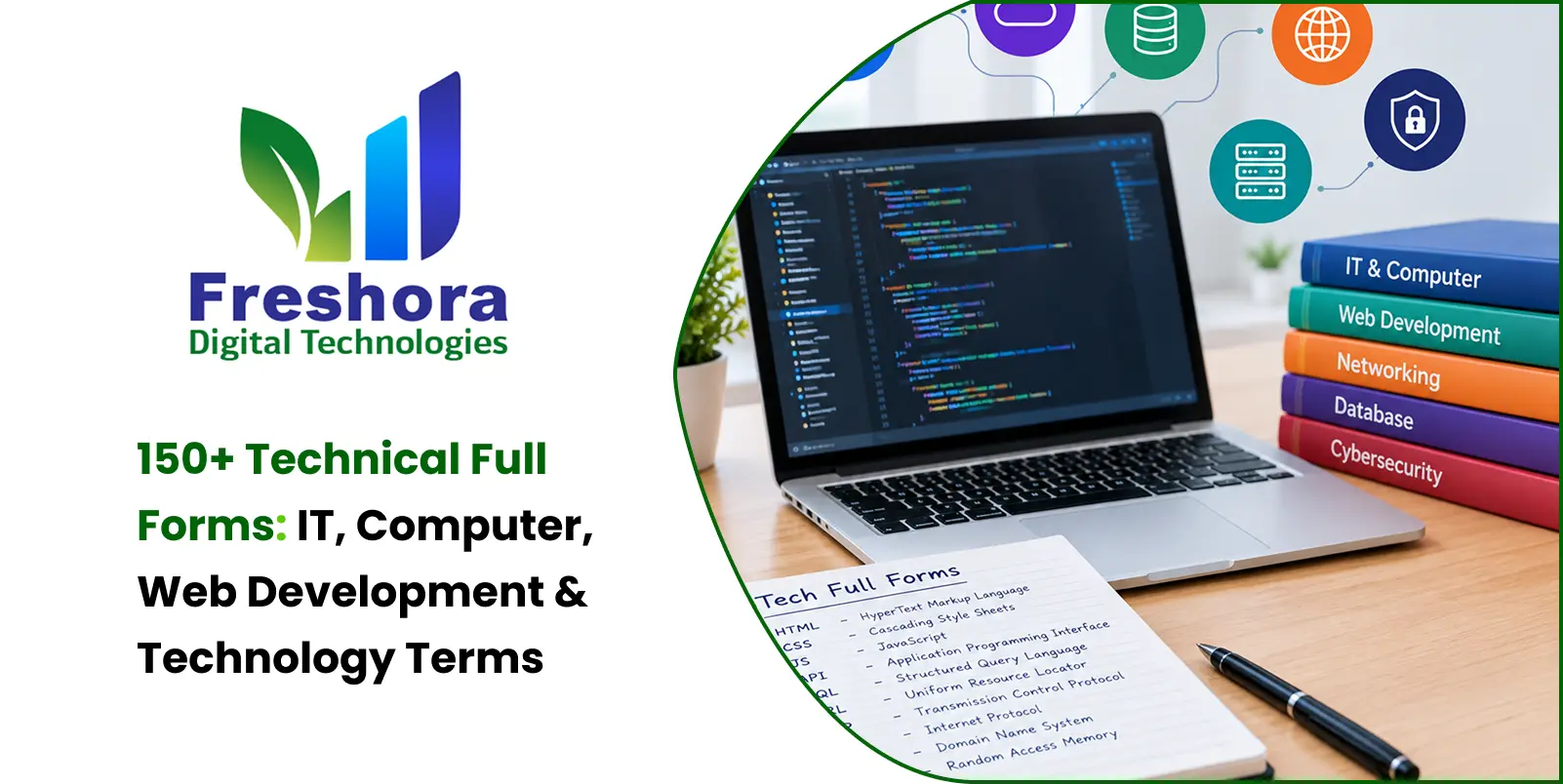
Technical abbreviations are used throughout web development, programming, databases, networking, c... Read More
Our expert will call you shortly to understand your needs and help grow your business.
Get exclusive digital marketing tips, SEO insights, web & app updates, and job opportunities delivered straight to your inbox.
Join our WhatsApp channel for instant digital marketing tips, SEO insights, web & app updates, and latest job opportunities.
Join NowFreshora Digital Technologies proudly serves businesses across India, including Chennai, Trichy (Tiruchirappalli), Madurai, Coimbatore, Salem, Erode, Tirunelveli, Thoothukudi, Thanjavur, Vellore, Tiruppur, Dindigul, Karur, Pudukkottai, Kanyakumari, Bengaluru, Mysuru, Mangaluru, Hubballi, Belagavi, Hyderabad, Visakhapatnam, Vijayawada, Guntur, Tirupati, Kochi, Thiruvananthapuram, Kozhikode, Thrissur, Mumbai, Pune, Nashik, Nagpur, Thane, Navi Mumbai, Delhi, Gurugram, Noida, Faridabad, Ghaziabad, Chandigarh, Ludhiana, Amritsar, Ahmedabad, Surat, Vadodara, Jaipur, Jodhpur, Udaipur, Lucknow, Kanpur, Varanasi, Agra, Kolkata, Bhubaneswar, Patna, Ranchi, Raipur, Bhopal, Indore, Guwahati, Dehradun, and other major cities and business centres across India.
We provide Website Development, Mobile App Development, Software Development, SEO Services, Google Business Profile Management, Google Ads, Meta Ads, Digital Marketing, UI/UX Design, E-commerce Development, Cloud Solutions, and AI Solutions to businesses across India. Our services are tailored to different industries, business sizes, and market requirements, helping organisations strengthen their online visibility, generate qualified enquiries, improve customer engagement, and achieve sustainable business growth. Beyond India, Freshora Digital Technologies also serves international clients across Singapore, the United Arab Emirates (UAE), Saudi Arabia, Qatar, Kuwait, Bahrain, Oman, Malaysia, Canada, Australia, the United Kingdom, and the United States. We deliver digital technology and marketing solutions tailored to local markets and the unique needs of businesses worldwide.

