Contact our team for professional guidance and solutions.
Many businesses still rely on spreadsheets, paper records, manual approvals, phone calls, and disconnected software to manage their daily operations. While these methods may have worked in the past, they often create delays, increase operational costs, and make it difficult to scale efficiently.
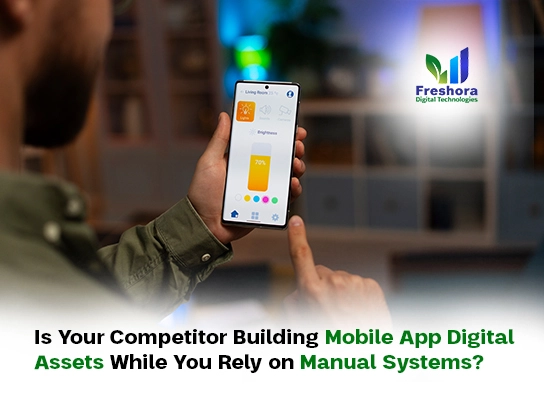
Meanwhile, competitors are investing in mobile applications that automate processes, improve customer experiences, enable real-time reporting, and create long-term digital assets. Rather than simply replacing paperwork, mobile applications become strategic business platforms that support growth, productivity, and data-driven decision-making.
This guide explains why Mobile App Development for Business has become a key component of digital transformation and how organizations can use custom mobile applications to improve operational efficiency, customer engagement, and long-term competitiveness.
Mobile App Development for Business helps organizations replace manual processes with secure, scalable digital solutions that improve productivity, customer experience, and operational efficiency. Businesses that invest in custom mobile applications gain faster workflows, real-time access to information, better collaboration, and valuable digital assets that support sustainable growth.
Businesses across industries are experiencing rapid digital transformation. Customers expect faster services, employees need instant access to information, and management teams rely on real-time data to make informed decisions.
Yet many organizations continue to depend on manual systems that slow operations and limit growth.
Common examples include:
Although these methods may seem familiar, they often introduce unnecessary complexity and reduce operational efficiency.
Industry research illustrates the growing importance of digital transformation:
These figures highlight a significant shift in how modern businesses operate.
Today, successful organizations view mobile applications not simply as customer-facing tools but as strategic digital assets that improve internal operations, strengthen customer relationships, and create long-term competitive advantages.
Manual systems often evolve gradually over many years.
Businesses may begin with paper documents, later introduce spreadsheets, and eventually adopt multiple disconnected software platforms.
Although each individual process may appear manageable, together they create operational inefficiencies.
Common challenges include:
As businesses grow, these issues become increasingly expensive.
Many organizations evaluate only direct expenses while overlooking the hidden costs created by inefficient workflows.
These hidden costs affect both productivity and customer satisfaction.
Employees spend valuable time:
Automated systems eliminate many repetitive tasks.
Manual data entry naturally introduces mistakes.
Common examples include:
Digital workflows improve consistency while reducing administrative mistakes.
Without centralized data, management teams often make decisions using incomplete or outdated information.
Real-time dashboards improve visibility across departments.
As customer numbers increase, manual systems require additional employees to perform repetitive administrative work.
Mobile applications automate routine activities, allowing businesses to scale more efficiently.
Many businesses view mobile apps only as customer convenience tools.
In reality, a professionally developed mobile application becomes a long-term digital asset.
Unlike temporary marketing campaigns, digital assets continue creating value over time.
Business mobile applications help organizations:
The application becomes part of the company's operational infrastructure.
Mobile App Development for Business focuses on creating customized mobile applications that address specific operational, customer, or management requirements.
Rather than purchasing generic software, businesses develop solutions tailored to their unique workflows.
Examples include:
Customization ensures the application aligns with business objectives rather than forcing businesses to adapt their processes.
Businesses often delay digital transformation until operational challenges become significant.
Some warning signs include:
If several of these issues exist, a mobile application may significantly improve operational efficiency.
Successful digital transformation occurs gradually.
A structured implementation process reduces disruption while maximizing long-term benefits.
Identify repetitive manual activities.
Understand how information moves throughout the business.
Define business objectives and required features.
Create a customized mobile solution aligned with operational requirements.
Introduce the application gradually while training employees.
Use customer and employee feedback to enhance future versions.
|
Manual Systems |
Mobile App-Driven Business |
|
Paper records |
Digital information |
|
Slow approvals |
Instant workflows |
|
Limited reporting |
Real-time dashboards |
|
Human errors |
Automated processes |
|
Office-dependent |
Mobile accessibility |
|
Separate communication channels |
Centralized collaboration |
|
Difficult scalability |
Flexible growth |
Organizations using mobile-first workflows generally respond more quickly to customer needs while improving internal productivity.
|
Ready-Made Software |
Custom Mobile App Development Services |
|
Standard features |
Designed for business requirements |
|
Limited customization |
Fully customized workflows |
|
Shared functionality |
Business-specific capabilities |
|
Less flexibility |
Highly scalable |
|
Generic user experience |
Personalized interface |
|
Vendor-controlled roadmap |
Business-controlled evolution |
Businesses with unique operational processes often achieve better long-term value through customized solutions.
Business applications create value across multiple operational areas.
Examples include:
Each department benefits from improved visibility and faster decision-making.
Despite clear benefits, many organizations postpone digital transformation.
Common concerns include:
However, delaying modernization often increases long-term operational costs while allowing competitors to gain technological advantages.
Every industry has unique operational challenges. A custom mobile application should solve those specific challenges instead of forcing businesses to adapt to generic software.
Below are examples of how different industries benefit from Business Mobile App Solutions.
Manufacturing companies often manage production schedules, inventory, quality inspections, and employee coordination across multiple departments.
A business mobile application can provide:
Managers gain instant visibility into factory operations without waiting for manual reports.
Hospitals, clinics, and diagnostic centres require fast and secure access to patient information.
Mobile applications can support:
This improves both patient experience and administrative efficiency.
Schools, colleges, and training centres increasingly depend on digital communication.
Mobile apps help manage:
Students, parents, and administrators remain connected through a single platform.
Retail organizations benefit from mobile applications that simplify customer interactions.
Popular features include:
These features encourage repeat purchases while strengthening customer relationships.
Businesses managing deliveries require real-time operational visibility.
Mobile applications provide:
Automation reduces delays and improves operational accuracy.
Property developers and real estate agencies use mobile applications to improve customer engagement.
Features may include:
The result is a smoother buying experience for prospective customers.
Many organizations initially invest in mobile applications to solve one operational problem.
Over time, those applications become central business platforms.
Enterprise Mobile App Development enables businesses to:
Rather than functioning as isolated software, enterprise applications become part of the organization's digital infrastructure.
Modern customers expect convenience, speed, and transparency.
A mobile application allows businesses to deliver these expectations consistently.
Customer-focused features include:
Reducing customer effort improves satisfaction while encouraging repeat business.
Employees also benefit significantly from business applications.
Instead of relying on emails, spreadsheets, or manual approvals, staff members can complete daily activities directly from their smartphones.
Employee applications may include:
Mobile accessibility supports faster collaboration regardless of location.
Businesses often evaluate software based only on development costs.
A better approach is measuring operational improvements over time.
Important performance indicators include:
|
KPI |
Business Benefit |
|
Processing Time |
Faster operations |
|
Employee Productivity |
Improved efficiency |
|
Customer Response Time |
Better customer experience |
|
Manual Errors |
Reduced administrative mistakes |
|
Operational Costs |
Lower recurring expenses |
|
Customer Retention |
Increased long-term revenue |
|
Workflow Completion Rate |
Stronger operational performance |
|
Data Accuracy |
Better business decisions |
Tracking these indicators demonstrates the long-term value of mobile applications.
Technology alone does not guarantee success.
Businesses should avoid several common implementation mistakes.
|
Mistake |
Better Approach |
|
Building unnecessary features |
Focus on business priorities |
|
Ignoring employee feedback |
Involve users during planning |
|
No training programme |
Provide structured onboarding |
|
Poor data migration |
Plan migration carefully |
|
Limited testing |
Test before launch |
|
No future scalability |
Design for long-term growth |
|
Ignoring security |
Implement strong data protection |
Careful planning increases adoption while reducing implementation risks.
Business technology continues evolving rapidly.
Organizations investing in digital assets today will be better prepared for future opportunities.
Emerging trends include:
These technologies will continue transforming how businesses operate and compete.
At Freshora Digital Technologies, we develop mobile applications that solve real business challenges rather than simply adding another piece of software.
Our development process focuses on long-term business value.
We begin by understanding your existing workflows, operational challenges, and growth objectives.
Every application is designed around your business processes instead of forcing your organization to adapt to predefined software.
We create intuitive interfaces that improve usability for both employees and customers.
Our development team builds scalable Android, iOS, and cross-platform applications using modern technologies and industry best practices.
Applications can integrate with:
This creates a connected digital ecosystem.
Technology evolves continuously.
We provide maintenance, feature enhancements, performance optimization, and security updates to ensure long-term reliability.
Businesses increasingly prefer working with technology partners who understand local industries while delivering world-class digital solutions.
Choosing a trusted Mobile App Development Company in Trichy provides several advantages:
Freshora Digital Technologies combines local expertise with modern mobile technologies to help businesses accelerate their digital transformation journey.
AI-powered search engines increasingly prioritize content that demonstrates expertise, practical value, and clear business outcomes.
To improve visibility in AI-assisted search:
These practices improve discoverability across both traditional search engines and AI-powered search experiences.
What is Mobile App Development for Business?
Mobile App Development for Business is the process of designing and building customized mobile applications that improve operations, customer engagement, employee productivity, and overall business performance.
Why should businesses replace manual systems?
Manual systems often create delays, increase errors, and limit scalability. Digital applications automate repetitive tasks while improving efficiency and decision-making.
Can small businesses benefit from mobile applications?
Yes. Mobile applications help businesses of all sizes improve customer communication, automate workflows, and strengthen operational efficiency.
What is Enterprise Mobile App Development?
Enterprise Mobile App Development focuses on creating secure, scalable mobile applications that support internal business operations across departments.
How long does it take to develop a business mobile application?
Development timelines depend on project complexity, required features, integrations, and testing requirements. Proper planning ensures better long-term outcomes.
The gap between businesses embracing digital transformation and those relying on manual systems continues to widen. While manual processes may appear familiar, they often create hidden costs, slow decision-making, and reduce operational agility. Meanwhile, competitors investing in mobile applications are building digital assets that improve efficiency, strengthen customer relationships, and support long-term business growth.
Mobile App Development for Business is no longer limited to large enterprises. Organizations of every size can benefit from customized applications that streamline operations, automate repetitive tasks, and provide real-time access to valuable business information.
At Freshora Digital Technologies, we help businesses transform traditional workflows into intelligent digital ecosystems through customized mobile application development. Whether you need an employee management platform, customer engagement app, inventory solution, or enterprise workflow system, our team delivers scalable solutions designed to support sustainable business growth.


In the fast-moving commercial and tourist landscape of Tiruchirappalli, the car rental industry is h... Read More
Blog Summary In the competitive landscape of Trichy, 85% of dental patients search online before bo... Read More

Blog Summary In the booming real estate market of Trichy, interior designers face intense competiti... Read More
Our expert will call you shortly to understand your needs and help grow your business.
Get exclusive digital marketing tips, SEO insights, web & app updates, and job opportunities delivered straight to your inbox.
Join our WhatsApp channel for instant digital marketing tips, SEO insights, web & app updates, and latest job opportunities.
Join NowFreshora Digital Technologies proudly serves businesses across Tiruchirappalli (Trichy), including Cantonment, Puthur, Thillai Nagar, Palakarai, Subramaniyapuram, Mela Chinthamani, Woraiyur, KK Nagar, Karumandapam, Crawford, Edamalaipatti Pudur (EMP), Kattur, Airport Area, Ariyamangalam, Panjappur, Thuvakudi, Tiruverumbur, BHEL Township, Srirangam, Thiruvanaikaval, Samayapuram, No.1 Tollgate, Central Bus Stand Area, and Chathiram Bus Stand Area.
We also serve clients across Tamil Nadu, India, and globally in Singapore, the UAE, Saudi Arabia, Canada, Australia, the United Kingdom, and the United States, delivering innovative Website Development, Mobile App Development, Software Development, SEO, Google Business Profile Management, and Digital Marketing solutions that help businesses grow and succeed in the digital world.


