
Contact our team for professional guidance and solutions.
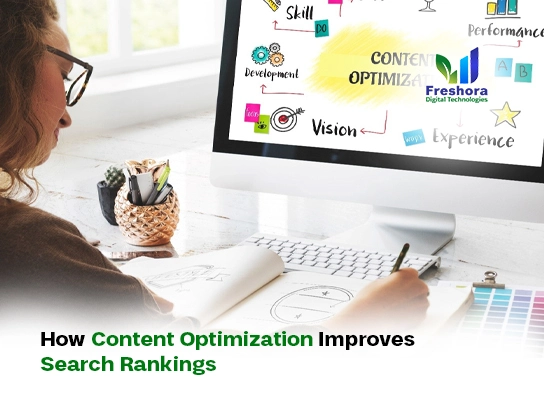
Strong SEO content is not created by adding keywords to an existing article and increasing its word count. Effective Content Optimization for Search Visibility involves understanding what users actually need, improving information depth, demonstrating expertise, strengthening page structure, connecting related resources, and making every section more useful than competing results. Google's current guidance emphasises helpful, reliable, people-first content, original information, substantial value, and demonstrated expertise rather than content created primarily to manipulate rankings.
Content optimization improves search performance by making a page:
More relevant → More useful → Easier to understand → Better aligned with search intent → More valuable to users
The process should involve intent research, content-gap analysis, information restructuring, original insights, on-page optimization, internal linking, expert validation, and continuous performance improvement.
Google recommends people-first content that provides original information, research, analysis, or substantial additional value.
Google does not recommend writing to a specific word count simply because someone claims it is preferred for rankings.
Google says relevant words should appear in prominent and descriptive locations such as titles, headings, alt text, and link text.
Google can generate search-result snippets from page content and may use the meta description when it provides a better summary.
Google says unique, valuable content is important for both traditional search results and its AI search experiences.
Search visibility increasingly depends on whether a page genuinely satisfies the reason behind a search rather than simply containing the right keywords. Content Optimization for Search Visibility turns existing and new website content into more useful search resources by aligning information with user intent, adding original expertise, improving structure, eliminating unnecessary sections, strengthening internal connections, and making important answers easier to discover. When content quality and SEO fundamentals work together, optimization becomes a process of increasing usefulness rather than merely increasing keyword frequency.
Content optimization is the process of improving a webpage so that it communicates its subject clearly to both users and search engines while providing stronger value than its previous version.
It can involve:
Reworking outdated information.
Matching content to search intent.
Improving headings.
Adding original research or examples.
Removing repetitive sections.
Expanding genuinely useful information.
Improving internal links.
Strengthening title and meta information.
Adding expert perspectives.
Improving readability.
Addressing unanswered user questions.
Connecting related pages into a logical topic cluster.
The important distinction is:
Content Expansion ≠ Content Optimization
Adding 1,000 words without adding value can make a page longer but not better.
Google explicitly says there is no preferred word count that guarantees better search performance.
Search behaviour has become more conversational and specific.
Users increasingly ask questions such as:
“Which solution is right for my business?”
rather than simply searching:
“SEO services.”
This means useful content must address the complete information journey.
For example:
Basic Query → Comparison → Evaluation → Decision → Action
A well-optimized page can support several stages without becoming repetitive.
Google's current guidance asks whether content provides a satisfying experience, demonstrates first-hand expertise, and leaves readers feeling they have learned enough to achieve their goal.
|
Search-content insight |
Verified value |
|
Google SEO Starter Guide originally launched |
2008 |
|
Google refreshed its SEO Starter Guide |
February 2024 |
|
Search-result snippets are primarily generated from |
Page content |
|
Google may use meta descriptions for snippets |
Yes |
|
Google Search uses structured data to understand content |
Yes |
|
Google recommends a preferred SEO word count |
No |
Google's documentation confirms that snippets are primarily generated from page content, while structured data can help Google understand page information for supported search features.
These figures are more useful than unsupported claims such as “1,500 words always ranks better,” because Google's own documentation explicitly rejects a preferred word-count formula.
A high-quality optimization workflow can be visualised as:
Search Intent
↓
Existing Content Audit
↓
Competitor & Content Gap Analysis
↓
Information Architecture
↓
Original Value Addition
↓
On-Page Optimization
↓
Internal Linking
↓
Expert Review
↓
↓
This creates a repeatable system rather than treating every article as a standalone publishing task.
Before editing content, determine what the user actually wants.
Search intent may be:
Informational.
Commercial investigation.
Transactional.
Navigational.
Local.
A page targeting “how to improve website speed” should teach the process.
A page targeting “website speed optimization service” should explain the service, value, process, and decision factors.
The keyword may be similar, but the required content is different.
Review:
Search visibility.
Click-through performance.
Existing rankings.
Content depth.
Outdated information.
Missing questions.
Duplicate ideas.
Weak headings.
Internal links.
External references.
Conversion opportunities.
This determines whether the page needs refinement, restructuring, expansion, consolidation, or replacement.
Compare the page with competing resources.
Do not ask only:
“What keywords do they use?”
Ask:
“What useful information are they providing that this page doesn't?”
Then go one step further:
“What can we explain better, demonstrate differently, or support with original evidence?”
That final question creates differentiation.
Google recommends adding original information, research, analysis, and substantial value instead of simply rewriting what other sources already say.
A useful page should guide readers naturally.
For example:
Problem
→ Why It Happens
→ Available Solutions
→ How to Implement
→ Common Mistakes
→ Expert Recommendation
→ Next Step
This is more useful than arranging headings simply because they contain keywords.
This is one of the strongest ways to differentiate content.
Original information could include:
Internal observations.
Client experience.
Survey findings.
Industry comparisons.
Expert commentary.
Original calculations.
Process frameworks.
Local market examples.
Before-and-after analysis.
Unique checklists.
Google's people-first guidance specifically encourages original information, research, analysis, and substantial additional value.
Review:
The title should accurately represent the page.
The H1 should clearly communicate what the reader will learn.
Use descriptive headings that make the page easy to scan.
Integrate relevant terminology naturally.
Use descriptive alt text where appropriate.
Connect readers to relevant supporting pages using meaningful anchor text.
Google recommends using words people would use to search for content and placing relevant terminology in prominent descriptive locations.
Internal links can create a logical relationship between related resources.
For example:
SEO Guide
→ Content Optimization
→ Link Building
This creates a connected content ecosystem rather than isolated articles.
Google's SEO guidance explains that links help users and search engines connect related resources and discover pages.
Expertise should be visible through the content itself.
Include:
Practical examples.
First-hand experience.
Clear methodology.
Evidence.
Industry-specific observations.
Author credentials where appropriate.
Transparent sourcing.
Google's guidance specifically encourages creators to demonstrate expertise and make it clear why readers should trust the content.
|
Optimization type |
Main purpose |
|
Intent optimization |
Match the user's actual need |
|
Semantic optimization |
Strengthen topical coverage |
|
Structural optimization |
Improve readability and navigation |
|
On-page optimization |
Clarify page relevance |
|
Content refresh |
Replace outdated information |
|
Conversion optimization |
Move readers toward action |
|
Internal-link optimization |
Connect related resources |
|
Local content optimization |
Improve geographic relevance |
|
E-E-A-T optimization |
Strengthen experience and trust signals |
|
AI-search optimization |
Make useful information easier to interpret and cite |
Content becomes better aligned with the questions users are actually asking.
A more complete and useful resource can compete more effectively for relevant searches.
Clear structure allows readers to locate answers faster.
Original examples, data, and expert perspectives give readers reasons to trust the page.
Regularly maintained resources can remain useful as information changes.
Connected content helps users move naturally between related topics.
Content can guide users from information discovery toward an appropriate business action.
Longer does not automatically mean better.
Google explicitly warns against writing to a particular word count simply because it is believed to influence rankings.
Repeating the same phrase unnaturally can reduce readability and create search-engine-first content.
Changing sentence structures while keeping the same information does not create genuine differentiation.
Optimization should consider what the page is already achieving.
Conciseness is valuable, but essential information should not be removed merely to reduce length.
Generic explanations can struggle to demonstrate genuine experience in competitive subjects.
Google specifically cautions against changing dates simply to make pages appear fresh when the underlying content has not substantially changed.
Start with search intent rather than keywords.
Audit existing content before rewriting.
Identify genuine information gaps.
Add original research, examples, or analysis.
Remove repetition and unnecessary filler.
Use descriptive titles and headings.
Build logical internal links.
Cite credible external sources where appropriate.
Demonstrate real expertise.
Update information when facts genuinely change.
Improve the page's conversion journey.
Measure performance after implementation.
Refresh content based on evidence rather than arbitrary publishing schedules.
Prioritise people-first usefulness over keyword density.
When a competitor answers a question, don't simply repeat the answer.
Go one layer deeper.
For example:
Competitor:
“What is content optimization?”
Better:
“What is it?”
↓
Why does it matter?
↓
How should a business implement it?
↓
What mistakes reduce its effectiveness?
↓
What should be measured?
↓
What would an expert do differently?
This creates a more complete information experience without relying on unnecessary word expansion.
Consider a Trichy-based business targeting customers searching for a professional service.
A basic article might explain:
“What is SEO?”
A stronger content asset could become:
“How SEO Generates Qualified Leads for Trichy Businesses”
It could include:
Local search behaviour.
Search-intent mapping.
Service-page examples.
Local competitor observations.
Google Business Profile integration.
Lead-generation pathways.
Expert recommendations.
Original business scenarios.
Conversion measurement.
The difference is not simply word count.
It is specificity + evidence + usefulness + commercial relevance.
For businesses seeking SEO Content Services in Trichy, the process can begin with a content and search-performance audit that identifies underperforming pages, missing topics, intent mismatches, outdated information, internal-link opportunities, and competitor content gaps. The optimization strategy can then prioritise pages according to business value rather than publishing volume.
Implementation can combine search-intent research, original content development, on-page optimization, internal linking, local relevance, expert-led insights, conversion-focused structure, and ongoing performance analysis. The goal is to build content that answers the customer's question thoroughly while giving the business a stronger, more differentiated search presence.
Content Optimization for Search Visibility is about improving usefulness, relevance, clarity, and depth.
Search intent should guide the structure before keyword placement.
Original research, analysis, examples, and expert insight create differentiation.
Google does not recommend a specific word count for ranking.
Internal links help connect users and search engines with related resources.
Titles and headings should clearly describe the content they introduce.
Content should be created primarily for people rather than search engines.
Updating content should involve meaningful improvements rather than cosmetic date changes.
SEO content should support both information discovery and business objectives.
The strongest optimization strategy is research-led, evidence-driven, expert-informed, and continuously refined.
Effective content optimization is not about making a webpage longer or inserting a target phrase more frequently; it is about making the resource substantially more useful, distinctive, trustworthy, and relevant to the person searching for an answer. Google's current guidance consistently emphasises people-first content, original information, demonstrated expertise, clear structure, relevant terminology, and genuine value over search-engine-first publishing tactics. When businesses combine these principles with search-intent research, thoughtful on-page improvements, internal linking, expert insights, and performance analysis, Organic Search Visibility can become the result of a stronger content experience rather than a keyword-driven publishing exercise.

Zero-Click Searches: Understanding Visibility When Users Stay on Google Zero-click searches occur w... Read More

In the vibrant city of Tiruchirappalli, where culture and tradition meet, photography studios often... Read More

Blog Summary: In the competitive digital landscape of Trichy, your website's visibility is the found... Read More
Our expert will call you shortly to understand your needs and help grow your business.
Get exclusive digital marketing tips, SEO insights, web & app updates, and job opportunities delivered straight to your inbox.
Join our WhatsApp channel for instant digital marketing tips, SEO insights, web & app updates, and latest job opportunities.
Join NowFreshora Digital Technologies proudly serves businesses across Tiruchirappalli (Trichy), including Cantonment, Puthur, Thillai Nagar, Palakarai, Subramaniyapuram, Mela Chinthamani, Woraiyur, KK Nagar, Karumandapam, Crawford, Edamalaipatti Pudur (EMP), Kattur, Airport Area, Ariyamangalam, Panjappur, Thuvakudi, Tiruverumbur, BHEL Township, Srirangam, Thiruvanaikaval, Samayapuram, No.1 Tollgate, Central Bus Stand Area, and Chathiram Bus Stand Area.
We also serve clients across Tamil Nadu, India, and globally in Singapore, the UAE, Saudi Arabia, Canada, Australia, the United Kingdom, and the United States, delivering innovative Website Development, Mobile App Development, Software Development, SEO, Google Business Profile Management, and Digital Marketing solutions that help businesses grow and succeed in the digital world.

