

Contact our team for professional guidance and solutions.
Email marketing has evolved from occasional newsletters into a strategic customer engagement system that helps businesses communicate consistently, build trust, and strengthen long-term relationships. Effective Email Marketing Services combine audience segmentation, personalization, automation, analytics, CRM integration, and customer lifecycle management to create relevant experiences at every stage of the customer journey.
Instead of sending the same promotional message to every subscriber, businesses can use customer data and behavioral insights to deliver the right message at the right time. This approach can improve Customer Email Engagement, streamline Email Marketing Automation, strengthen Business Email Marketing, and make Email Campaign Management more measurable and efficient.
This guide explains how professional email marketing services improve customer engagement, which strategies businesses should prioritize, how performance should be measured, and how an integrated approach can support sustainable digital growth.
Professional Email Marketing Services improve customer engagement by delivering personalized and relevant communication, automating customer journeys, segmenting audiences, analyzing campaign behavior, and nurturing relationships throughout the customer lifecycle.
Businesses can improve engagement by:
A well-managed email marketing strategy turns email from a simple promotional channel into a structured customer relationship system.
Customer engagement is an important part of sustainable business growth. Customers increasingly expect brands to understand their interests, communicate at appropriate times, and provide information that is genuinely useful rather than sending repetitive promotional messages.
Email remains valuable because it provides a direct and measurable communication channel between businesses and their audiences. However, successful email marketing requires more than creating attractive newsletters. Businesses need a structured strategy that connects customer data, content, automation, segmentation, analytics, and business objectives.
Professional Email Marketing Services help establish that structure.
For example, a new subscriber might receive a welcome email immediately after signing up, followed by educational content several days later. A customer who has already purchased may receive onboarding information, product education, feedback requests, and relevant recommendations. An inactive subscriber can enter a re-engagement sequence rather than continuing to receive the same general campaigns.
This type of lifecycle communication makes email more relevant and useful.
Industry research has also highlighted the potential value of email marketing. Litmus has reported an average email marketing return of approximately USD 36 for every USD 1 invested, although actual results vary considerably by industry, audience, strategy, and execution. Other industry research has demonstrated the potential benefits of personalization and segmentation. Businesses should verify the original methodology, publication date, and context of any benchmark before using a statistic as a performance expectation.
The central principle is simple:
Better customer understanding leads to more relevant communication, and more relevant communication can lead to stronger engagement.
Email Marketing Services help businesses plan, create, automate, manage, measure, and optimize email communication.
Professional services can include:
The objective is not simply to increase the number of emails a business sends. The objective is to make every communication more relevant to the recipient and more closely connected to a measurable business goal.
Customer engagement represents the quality and frequency of interactions between customers and a business.
Strong engagement can contribute to:
However, engagement should not be measured only through email opens. Modern email programs should evaluate meaningful actions such as clicks, website visits, replies, conversions, purchases, and repeat interactions.
The most valuable question is therefore not:
"Did the customer open the email?"
It is:
"Did the communication encourage a meaningful next step?"
Professional email marketing can improve engagement through several connected strategies.
Sending the same email to every subscriber can make communication less relevant.
Segmentation allows businesses to organize subscribers based on characteristics such as:
Example
A digital marketing company could create separate segments for:
|
Audience |
Relevant Email |
|
New subscribers |
Welcome and educational series |
|
Marketing leads |
Service education and case studies |
|
Existing clients |
Performance updates and recommendations |
|
Inactive subscribers |
Re-engagement campaign |
|
High-value customers |
Loyalty or priority communication |
This approach gives customers information that is more closely aligned with their needs.
Personalization goes beyond adding a customer's first name.
Effective personalization can use:
For example, instead of sending the same email to every customer, a business could send an educational article to a new lead, a product recommendation to an existing customer, and a re-engagement message to an inactive subscriber.
The goal is to make communication useful rather than simply personal.
Email Marketing Automation allows businesses to create predefined workflows that respond to customer actions or lifecycle stages.
Common automated workflows include:
Example: A Simple Welcome Workflow
A business could structure a welcome sequence like this:
Day 0: Welcome message and introduction.
Day 2: Educational content related to the customer's interest.
Day 5: Useful resources or a case study.
Day 8: Explanation of products or services.
Day 12: Consultation, enquiry, or purchase CTA.
Automation ensures communication continues consistently without requiring every email to be sent manually.
Customers are less likely to engage with emails that only promote products.
A balanced email strategy can include:
A useful principle is:
Educate → Build Trust → Create Relevance → Encourage Action
This approach supports customer relationships instead of relying entirely on promotional messages.
Different customers require different communication.
A professional lifecycle strategy can include:
Attract → Welcome → Nurture → Convert → Onboard → Retain → Reactivate
Encourage relevant audiences to subscribe through websites, landing pages, forms, content offers, or other permission-based channels.
Introduce the brand and establish expectations.
Provide educational information and demonstrate expertise.
Present an appropriate product, service, consultation, or offer.
Help new customers understand how to use the product or service successfully.
Continue providing value after the initial purchase.
Reconnect with subscribers whose engagement has declined.
Lifecycle marketing ensures communication continues beyond the initial conversion.
Professional email marketing can provide several operational and customer-facing benefits.
Segmentation and personalization allow businesses to communicate according to customer interests and behavior.
Automation reduces the risk of missed follow-ups and inconsistent customer communication.
Regular, useful communication helps businesses remain connected with existing customers.
Automated workflows reduce repetitive manual work.
Analytics provide information about how audiences interact with campaigns.
Businesses can manage communication with larger audiences without manually sending every message.
Consistent value-driven communication can strengthen trust and familiarity with the brand.
A structured email marketing process can be divided into six stages.
Review existing campaigns, subscriber data, automation workflows, CRM integration, content, deliverability, and performance.
Questions may include:
Define:
The strategy should connect marketing activity with measurable business outcomes.
Create:
Every component should support the customer journey.
Campaigns are scheduled and delivered to the appropriate audience.
Before sending, businesses should review:
Testing before launch helps reduce avoidable errors.
Performance should be evaluated using relevant metrics such as:
Open rates can provide directional insight, but they should not be treated as the only measure of success because privacy features and email-client behavior can affect their accuracy.
Campaign results should influence future decisions.
Optimization can include:
Email marketing should be treated as an ongoing optimization process rather than a one-time activity.
Customer Relationship Management systems provide valuable context for email communication.
CRM integration can support:
For example, a sales team may identify a lead that has repeatedly interacted with educational content. The marketing system can use that information to provide more relevant content or trigger an appropriate follow-up.
The purpose of CRM integration is not to send more emails. It is to provide better context so communication becomes more relevant.
Email Engagement Metrics to Track
Businesses should select metrics according to their campaign objectives.
|
Metric |
What It Helps Measure |
|
Click-through rate |
Interest in email content |
|
Conversion rate |
Completion of the desired action |
|
Reply rate |
Direct customer interaction |
|
Website visits |
Traffic generated by email |
|
Revenue |
Commercial contribution |
|
Unsubscribe rate |
Audience dissatisfaction or fatigue |
|
Bounce rate |
Delivery and list quality |
|
Subscriber growth |
Audience development |
|
Retention |
Long-term customer value |
|
ROI |
Financial effectiveness |
For example, an educational newsletter may focus on clicks and content engagement, while an ecommerce campaign may prioritize conversions and revenue.
Customer engagement also depends on the quality of the email experience.
Businesses should optimize:
A professionally designed email should make it easy for the customer to understand:
Why am I receiving this?
What value does it provide?
What should I do next?
Businesses can gradually increase the sophistication of their personalization strategy.
The same message is sent to the entire audience.
Subscribers are divided into broad groups.
Content is adapted to customer characteristics and interests.
Messages respond to customer actions.
Customer history and lifecycle data influence communication.
Businesses use advanced data and automation to provide increasingly relevant recommendations.
The goal is not to reach the most advanced level immediately. Businesses should build their capabilities progressively while maintaining data quality, customer consent, and privacy.
Businesses can create a broader view of email program health by monitoring multiple indicators.
Consider reviewing:
No single metric determines whether an email program is successful.
A healthy program should demonstrate positive movement across several relevant indicators.
|
In-House Email Marketing |
Professional Email Marketing Services |
|
Campaigns may rely on internal resources |
Dedicated strategic campaign management |
|
Limited time for optimization |
Continuous testing and optimization |
|
Basic segmentation may be used |
Advanced audience segmentation |
|
Manual workflows |
Automated customer journeys |
|
Limited reporting |
Structured performance reporting |
|
Generic communication may occur |
Personalized communication |
|
CRM integration may be limited |
CRM and marketing integration |
|
Scaling can require additional internal resources |
Scalable campaign management |
The right approach depends on a business's internal capabilities, resources, audience size, and marketing objectives.
Mass communication without meaningful segmentation can reduce relevance.
Customers also need education, support, useful resources, and relationship-building communication.
A new subscriber should not necessarily receive the same message as a long-term customer.
Automation should improve relevance and consistency rather than create excessive or repetitive messages.
A significant portion of email interaction occurs on mobile devices, so campaigns should be designed responsively.
Businesses should evaluate meaningful actions such as clicks, conversions, revenue, and retention.
Email marketing should support retention and loyalty, not only new customer acquisition.
Outdated or inaccurate customer information can reduce personalization quality and campaign relevance.
Businesses can use the following questions to review their current email marketing program:
A regular audit can identify gaps before they become larger performance problems.
Email marketing performs best when it works alongside other digital systems.
An integrated ecosystem can include:
For example, a user may discover a business through search, visit a landing page, subscribe to an email list, receive a nurturing sequence, contact the sales team, and later receive customer onboarding communication.
Connecting these channels creates a more consistent customer experience.
Email marketing is becoming increasingly data-driven and automated.
Important developments include:
Businesses should adopt new technologies based on genuine customer and business needs rather than using AI simply because it is available.
Data privacy, customer consent, transparency, and responsible use of customer information should remain central to future email strategies.
Freshora Digital Technologies helps businesses develop structured email marketing systems designed around customer behavior, business objectives, and measurable performance.
Our approach focuses on building a complete communication process rather than simply sending individual campaigns.
We review the business, target audience, existing customer data, current campaigns, and marketing objectives.
We help identify relevant audience groups based on customer characteristics, interests, lifecycle stages, and available behavioral information.
We develop campaign themes, customer journeys, content plans, automation opportunities, and measurable KPIs.
We create appropriate workflows for activities such as:
We evaluate campaign performance and identify opportunities to improve content, segmentation, timing, calls-to-action, and workflows.
Where appropriate, email marketing can be connected with CRM systems, websites, analytics platforms, SEO, content marketing, social media, and other digital channels.
Our goal is to help businesses turn email communication into a scalable customer engagement system that supports measurable, long-term growth.
Businesses in Trichy across education, healthcare, manufacturing, retail, professional services, and other sectors can use email marketing to maintain consistent communication with prospects and customers.
A local business could use email campaigns for:
Businesses looking for broader Digital Marketing Services in Trichy can also integrate email with SEO, content marketing, CRM, social media, paid advertising, and analytics.
The most effective strategy depends on the business model, target audience, customer journey, and available customer data.
Every email should provide a clear reason for the customer to engage.
Personalization works best when businesses first understand the audience group receiving the communication.
Use automation for predictable customer interactions while maintaining opportunities for human support when needed.
Track clicks, conversions, revenue, retention, and other business outcomes instead of relying on a single engagement metric.
Use A/B testing and performance data to identify what resonates with different audiences.
Relevant communication is more valuable than simply increasing email frequency.
Educational and helpful content can create trust that supports future conversions.
Email Marketing Services help businesses plan, create, automate, manage, measure, and optimize email communication to improve customer engagement and support business objectives.
They improve engagement through personalization, audience segmentation, automation, relevant content, lifecycle communication, CRM integration, and continuous campaign optimization.
Email Marketing Automation uses predefined workflows and customer actions to send relevant communication automatically at appropriate stages of the customer journey.
Email Campaign Management coordinates strategy, content, segmentation, scheduling, testing, analytics, and optimization so campaigns remain consistent and measurable.
Businesses should select metrics according to their goals. Common measures include click-through rate, conversion rate, revenue, unsubscribe rate, bounce rate, subscriber growth, retention, and ROI.
Yes. CRM integration can provide customer information such as lifecycle stage, purchase history, preferences, and sales activity, allowing businesses to create more relevant campaigns and workflows.
Businesses seeking email marketing, CRM integration, automation, SEO, analytics, and other digital marketing solutions can explore services from Freshora Digital Technologies.
Professional email marketing is no longer limited to newsletters and promotional offers. It has developed into a structured customer engagement system that can help businesses understand their audiences, personalize communication, automate customer journeys, measure performance, and build long-term relationships.
Effective Email Marketing Services combine segmentation, personalization, automation, CRM integration, valuable content, analytics, and continuous optimization. When these elements work together, businesses can create more relevant customer experiences while improving marketing efficiency and supporting measurable business objectives.
At Freshora Digital Technologies, we help businesses develop customer-focused email marketing strategies that connect audience insights, automation, campaign management, analytics, and broader digital marketing activities. Our approach is designed to help businesses strengthen customer relationships and build scalable digital marketing systems.
For businesses looking for Digital Marketing Services in Trichy, integrating email marketing with SEO, content marketing, CRM, social media, paid advertising, and analytics can create a more connected approach to customer acquisition and retention.
If your business is experiencing low email engagement, inconsistent follow-ups, limited personalization, or manually managed campaigns, a structured email marketing strategy can help identify opportunities for improvement.
Freshora Digital Technologies can help you plan, implement, automate, and optimize email marketing campaigns around your customer journey and business objectives.
Contact Freshora Digital Technologies to discuss your email marketing requirements and customer engagement goals.

Summary: This article explains bulk email marketing Trichy, covering email campaigns, automation, le... Read More
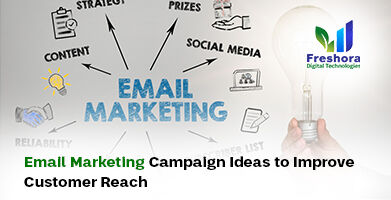
Blog Summary Email remains one of the most effective ways for businesses to communicate directly wi... Read More
Blog Summary Business communication is no longer limited to phone calls, printed brochures, or occa... Read More
Our expert will call you shortly to understand your needs and help grow your business.
Get exclusive digital marketing tips, SEO insights, web & app updates, and job opportunities delivered straight to your inbox.
Join our WhatsApp channel for instant digital marketing tips, SEO insights, web & app updates, and latest job opportunities.
Join NowFreshora Digital Technologies proudly serves businesses across Tiruchirappalli (Trichy), including Cantonment, Puthur, Thillai Nagar, Palakarai, Subramaniyapuram, Mela Chinthamani, Woraiyur, KK Nagar, Karumandapam, Crawford, Edamalaipatti Pudur (EMP), Kattur, Airport Area, Ariyamangalam, Panjappur, Thuvakudi, Tiruverumbur, BHEL Township, Srirangam, Thiruvanaikaval, Samayapuram, No.1 Tollgate, Central Bus Stand Area, and Chathiram Bus Stand Area.
We also serve clients across Tamil Nadu, India, and globally in Singapore, the UAE, Saudi Arabia, Canada, Australia, the United Kingdom, and the United States, delivering innovative Website Development, Mobile App Development, Software Development, SEO, Google Business Profile Management, and Digital Marketing solutions that help businesses grow and succeed in the digital world.


