Contact our team for professional guidance and solutions.
Many businesses experience short-term success from occasional email promotions but struggle to maintain consistent customer engagement and measurable business growth over time. Sustainable results require more than sending promotional emails when a new product launches or a seasonal offer becomes available.
High-performing Email Marketing Campaigns operate as structured communication systems that educate customers, nurture leads, strengthen relationships, and encourage repeat business. Businesses that develop a long-term Email Campaign Strategy, use Email Marketing Automation, improve Customer Email Engagement, and integrate Business Email Marketing into their wider digital strategy can create a more consistent and scalable approach to customer communication.
This guide explains how to build a reliable email marketing system, from planning campaigns and automating customer journeys to maintaining engagement, measuring performance, and continuously improving results.
Successful Email Marketing Campaigns deliver more consistent results when businesses build repeatable communication systems instead of relying on isolated promotional emails. The strongest approach combines a planned campaign calendar, automated customer journeys, audience segmentation, valuable content, personalization, performance monitoring, and continuous optimization.
The goal is not simply to send more emails. It is to deliver the right message, to the right audience, at the right stage of the customer journey.
Consistent communication is more sustainable than occasional promotions.
Automation helps businesses deliver timely communication at scale.
Customer journeys make email communication more relevant.
Valuable content builds trust and encourages long-term engagement.
Segmentation improves message relevance.
Evergreen campaigns can continue delivering value over time.
Performance data helps businesses identify opportunities for improvement.
Long-term customer relationships support sustainable business growth.
Many businesses use email marketing only when launching a product, announcing a discount, or promoting a special event. These campaigns may create temporary increases in engagement or sales, but they do not always build the consistent customer relationships needed for long-term growth.
Modern customers expect more than occasional promotions. They expect relevant updates, useful information, personalized recommendations, educational resources, and communication that reflects where they are in the customer journey.
This is why effective Email Marketing Campaigns should be treated as an ongoing communication system rather than a collection of individual sales messages. A well-planned approach can combine automation, audience segmentation, educational content, customer nurturing, and performance optimization to create a more consistent customer experience.
Businesses frequently ask:
Why do some email campaigns produce consistent results?
How can automation improve campaign efficiency?
How often should businesses communicate with subscribers?
What keeps customers engaged over time?
How can businesses prevent subscriber fatigue?
Which metrics matter when measuring long-term email performance?
The answer begins with one important principle: consistency works best when it is supported by relevance and value.
Email Marketing Campaigns are planned communication programs designed to help businesses engage audiences, nurture leads, educate customers, support sales, and strengthen long-term relationships.
Depending on the business objective, a campaign may focus on:
Customer acquisition
Product or service education
Brand awareness
Customer onboarding
Customer retention
Repeat business
Re-engagement
Loyalty
Sales support
A successful campaign has four essential elements:
A clear objective
A defined audience
Relevant content
A measurable next step
For example, a new subscriber may receive a welcome sequence, while an existing customer may receive product guidance, service updates, or loyalty communication.
Customers are more likely to remember and trust businesses that communicate consistently.
However, consistency does not mean sending emails every day. It means maintaining a reliable communication approach that customers can understand and expect.
Consistent email communication can help businesses:
Increase brand familiarity
Maintain customer awareness
Improve engagement
Support purchasing decisions
Encourage repeat interactions
Strengthen customer retention
Create more reliable performance data
A business that communicates only during promotions may become invisible between campaigns. A business that consistently provides useful communication has more opportunities to remain relevant throughout the customer journey.
An effective Email Campaign Strategy connects individual emails to wider business and customer objectives.
A complete strategy should include:
Audience segmentation
Customer journey planning
Content themes
Campaign scheduling
Personalization
Performance measurement
Testing and optimization
The purpose of the strategy is to ensure that campaigns work together rather than operating as disconnected activities.
For example, a customer journey could move through the following stages:
Subscribe → Learn → Build Trust → Explore Solutions → Take Action → Become a Customer → Receive Ongoing Support
Each stage can be supported by relevant email communication.
Email Marketing Automation allows businesses to send relevant messages automatically when customers take specific actions or reach a particular stage in their journey.
Automation can support:
Welcome sequences
Lead nurturing
Customer onboarding
Follow-up communication
Appointment reminders
Product education
Renewal reminders
Re-engagement
Loyalty communication
The main advantage is consistency. Instead of manually remembering to send every message, businesses can build workflows that deliver communication based on predefined triggers and customer behaviour.
Automation should not make communication feel robotic. The best workflows combine automation with relevant messaging, useful content, and appropriate timing.
A simple lead-nurturing workflow could look like this:
Thank the subscriber and introduce what they can expect from future communication.
Share a useful guide, article, checklist, or industry insight.
Explain a challenge the audience may experience and provide practical guidance.
Share a customer success story, case study, or useful example.
Explain how a relevant product or service can help solve the problem.
Invite the customer to book a consultation, request information, explore a service, or make an enquiry.
This type of sequence creates a progression rather than repeating the same promotional message.
Strong Customer Email Engagement means subscribers are actively interacting with email communication.
Engagement may include:
Opening emails
Clicking links
Replying to messages
Downloading resources
Visiting the website
Registering for events
Requesting consultations
Making purchases
Returning for future interactions
However, engagement should not be judged by a single metric alone.
For example, an email with fewer clicks may still be successful if it generates high-quality enquiries. A customer education campaign may perform differently from a direct sales campaign.
The most useful measurement depends on the purpose of the campaign.
Businesses can improve engagement by focusing on relevance.
Important practices include:
Segmenting audiences by meaningful differences
Writing clear and relevant subject lines
Personalizing content where appropriate
Sending emails at a suitable frequency
Using mobile-friendly layouts
Providing useful information
Including one clear primary call-to-action
Testing content and timing
Reviewing subscriber behaviour
The objective should be to make each email worth opening.
Modern Business Email Marketing can support multiple business functions.
Businesses may use email for:
Marketing communication
Sales follow-up
Customer support
Product education
Customer onboarding
Event promotion
Business announcements
Service reminders
Relationship building
This makes email more than a promotional channel. When integrated properly, it can support communication across the entire customer lifecycle.
The strongest email programs are built around repeatable processes.
Instead of sending emails only when promotions arise, plan communication in advance.
A monthly calendar might include:
One educational email
One industry insight
One customer story
One business or product update
One relevant promotional campaign
The exact schedule will vary depending on the industry and audience.
The important point is to create a realistic schedule that the business can maintain.
Different customers need different communication.
Consider key stages such as:
New subscriber
Interested prospect
First-time customer
Repeat customer
Loyal customer
Inactive subscriber
Then identify what each audience needs to know and what action is most relevant at that stage.
Journey mapping helps prevent businesses from sending identical communication to everyone.
Once the customer journey is mapped, identify messages that can be automated.
Common examples include:
Welcome emails
Follow-up sequences
Onboarding
Educational series
Renewal reminders
Re-engagement
Post-purchase communication
Automation can save time while improving communication consistency.
Subscribers are more likely to remain engaged when emails consistently provide something useful.
This may include:
Practical advice
Industry insights
Product guidance
Tutorials
Frequently asked questions
Customer stories
Checklists
Educational resources
Not every email needs to sell something.
Some emails should help customers understand a problem, learn something new, or make a better decision.
A consistent system should also be a learning system.
Businesses should regularly review:
Engagement trends
Click behaviour
Conversions
Subscriber growth
Unsubscribe patterns
Campaign revenue
Customer retention
Workflow performance
The purpose of measurement is not simply reporting. It is identifying what should be improved.
Some email campaigns can continue providing value long after they are initially created.
Examples include:
Welcome sequences
Educational email series
Product tutorials
Customer onboarding
Frequently asked question sequences
Resource recommendations
Industry guides
Customer success stories
These campaigns are valuable because they do not need to be recreated for every new subscriber.
Businesses can periodically review and update the content to keep it relevant.
Not every email needs to be part of an automated workflow.
Businesses can also maintain recurring communication through:
Weekly or monthly newsletters
Industry updates
Educational content
Customer success stories
Product guidance
Business announcements
Seasonal planning
Loyalty communication
A recurring communication cycle helps businesses stay connected with customers between major campaigns.
A simple monthly structure could include:
Share a useful guide, insight, or practical tip.
Highlight a relevant customer experience or success example.
Explain a feature, service, process, or solution.
Invite customers to take the next step when appropriate.
This structure can be adjusted based on audience preferences, industry requirements, and campaign objectives.
There is no single frequency that works for every business.
The right email cadence depends on:
Customer expectations
Industry
Buying cycle
Content availability
Campaign objectives
Engagement history
Seasonal demand
Product complexity
Subscriber preferences
Sending too frequently can create fatigue. Sending too rarely can reduce brand recall.
Businesses should monitor engagement and adjust their communication based on how audiences respond.
Customer engagement can decline when content becomes repetitive or no longer matches subscriber needs.
Businesses can maintain interest by:
Refreshing content themes
Reviewing audience segments
Updating automation workflows
Improving personalization
Testing different content formats
Asking for customer feedback
Re-engaging inactive subscribers
Reviewing performance trends
Regular optimization helps ensure that a previously successful campaign does not become outdated.
| One-Time Campaign | Consistent Email Marketing System |
|---|---|
| Runs around specific promotions | Operates through planned communication |
| Often focuses on short-term goals | Supports long-term relationships |
| Frequently managed manually | Uses automation where appropriate |
| Limited campaign history | Builds ongoing performance data |
| Reactive planning | Proactive campaign calendar |
| Irregular customer interaction | Consistent communication |
| Temporary performance spikes | Focus on sustainable improvement |
| Can become difficult to repeat | Designed to be scalable |
The strongest businesses can still run one-time promotional campaigns. The difference is that those campaigns become part of a wider communication system rather than being the only time customers hear from the business.
Review your email system regularly:
A regular review process helps businesses maintain quality as their email marketing program grows.
Irregular communication can make it difficult to build long-term customer awareness.
Maintain ongoing communication between promotional campaigns.
Automation is useful, but poorly designed workflows can create irrelevant or repetitive messages.
Review workflows from the customer's perspective.
Different customers have different needs.
Use segmentation to improve relevance.
Immediate revenue is important, but customer education, engagement, and retention also contribute to long-term performance.
Measure both short-term and long-term outcomes.
Customer acquisition should not replace customer nurturing.
Existing subscribers and customers can provide repeat business, referrals, and valuable long-term relationships.
An automation workflow is not necessarily effective forever.
Review content, timing, segmentation, and customer behaviour regularly.
Email marketing continues to evolve through improved automation, customer data, and personalization.
Important developments include:
AI-assisted journey planning
Predictive customer lifecycle insights
Dynamic content
Behaviour-based automation
Improved engagement scoring
Zero-party data strategies
Adaptive send-time optimization
AI-supported performance analysis
Interactive email experiences
Stronger CRM integration
These technologies can improve efficiency and relevance when used strategically. However, technology should support the customer experience rather than replace thoughtful communication.
At Freshora Digital Technologies, we help businesses develop structured email marketing systems designed to support consistent customer communication and measurable digital growth.
Our approach can include:
Email campaign planning
Customer journey mapping
Audience segmentation
Email automation workflows
Lead nurturing sequences
Customer onboarding
Re-engagement campaigns
Customer retention strategies
Performance analytics
CRM and marketing automation integration
We also provide integrated Digital Marketing Services in Trichy, helping businesses connect email marketing with SEO, content marketing, paid advertising, social media, CRM systems, and analytics.
Our goal is to help businesses create a practical and scalable communication system rather than relying only on occasional promotional campaigns.
Create a repeatable process before increasing campaign frequency or automation complexity.
Sending more emails does not automatically improve results. Focus on delivering useful communication to the right audience.
Customer behaviour, business offerings, and audience needs can change. Update workflows accordingly.
Track engagement, customer retention, repeat interactions, and conversions alongside campaign revenue.
The quality of communication can influence how customers perceive the entire business.
Email Marketing Campaigns are planned communication programs used to engage audiences, nurture leads, educate customers, promote relevant solutions, and strengthen long-term relationships.
Automation helps businesses deliver timely communication based on customer actions or lifecycle stages, reducing repetitive manual work and improving consistency.
Customer engagement helps businesses understand whether their communication is relevant and useful. Strong engagement can support customer relationships, conversions, and retention.
Successful campaigns usually have a clear objective, a defined audience, relevant content, appropriate timing, a clear call-to-action, and measurable outcomes.
Businesses in Trichy can use structured email communication to maintain stronger relationships with customers and prospects between major marketing campaigns.
Educational institutions, retailers, manufacturers, healthcare providers, professional service businesses, and other organizations can use email to share useful updates, nurture enquiries, educate customers, provide service information, and encourage repeat business.
A well-planned email system can also be integrated with CRM tools, website lead generation, SEO, content marketing, and other digital channels.
Businesses looking for Digital Marketing Services in Trichy can use an integrated approach to connect customer communication across multiple stages of the digital journey.
Email Marketing Campaigns are more sustainable when built as ongoing communication systems rather than isolated promotions.
A structured Email Campaign Strategy connects customer needs with business objectives.
Email Marketing Automation can improve consistency and efficiency when workflows are designed around the customer journey.
Strong Customer Email Engagement depends on relevance, value, timing, and continuous improvement.
Evergreen and recurring campaigns can help businesses maintain communication over time.
Performance data should be used to improve future campaigns rather than simply report results.
A balanced approach to automation, personalization, and valuable content supports long-term customer relationships.
Integrated Digital Marketing Services in Trichy can help businesses connect email marketing with broader digital growth strategies.
The most effective email marketing programs are not built around occasional promotions alone. They are built around a consistent communication system that understands customer needs and delivers relevant information throughout the customer journey.
Businesses that develop structured Email Marketing Campaigns, create a clear Email Campaign Strategy, use Email Marketing Automation thoughtfully, and continuously improve Customer Email Engagement can build stronger relationships and create a more sustainable approach to digital growth.
The goal is not to automate every interaction or increase email volume. The goal is to create communication that is useful, timely, relevant, and measurable.
At Freshora Digital Technologies, we help businesses build structured email marketing systems through strategic planning, automation, audience segmentation, customer journey development, analytics, and integrated Digital Marketing Services in Trichy.
Summary: This article explains bulk email marketing Trichy, covering email campaigns, automation, le... Read More
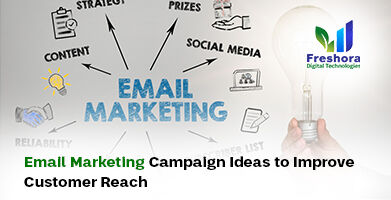
Blog Summary Email remains one of the most effective ways for businesses to communicate directly wi... Read More
Blog Summary Business communication is no longer limited to phone calls, printed brochures, or occa... Read More
Our expert will call you shortly to understand your needs and help grow your business.
Get exclusive digital marketing tips, SEO insights, web & app updates, and job opportunities delivered straight to your inbox.
Join our WhatsApp channel for instant digital marketing tips, SEO insights, web & app updates, and latest job opportunities.
Join NowFreshora Digital Technologies proudly serves businesses across Tiruchirappalli (Trichy), including Cantonment, Puthur, Thillai Nagar, Palakarai, Subramaniyapuram, Mela Chinthamani, Woraiyur, KK Nagar, Karumandapam, Crawford, Edamalaipatti Pudur (EMP), Kattur, Airport Area, Ariyamangalam, Panjappur, Thuvakudi, Tiruverumbur, BHEL Township, Srirangam, Thiruvanaikaval, Samayapuram, No.1 Tollgate, Central Bus Stand Area, and Chathiram Bus Stand Area.
We also serve clients across Tamil Nadu, India, and globally in Singapore, the UAE, Saudi Arabia, Canada, Australia, the United Kingdom, and the United States, delivering innovative Website Development, Mobile App Development, Software Development, SEO, Google Business Profile Management, and Digital Marketing solutions that help businesses grow and succeed in the digital world.


